Wednesday, September 30, 2009

Hush Hush by Becca Fitzpatrick

Genre: YA Paranormal Romance

Copyright: 2009

Pages: 391

Rating:


I was lucky enough to get an ARC of this book, and since I knew nothing about it at first, I was pleasantly surprised from the moment I opened it. To say I really enjoyed this book would be an understatement. And I hate to sound like other reviews out there by drawing similarities to Twilight, but to me it seems a little apparent that this author used similar plot devices. But for me, it was like a much better version of Twilight...something I simply did not want to put down because it was almost like I was worried it would get away from me.

Imagine you go to class one day and the teacher makes you sit next to the new guy - mister tall, dark, and mysterious. Do you do your best to avoid him, or do you go against your better judgment and let yourself get to know him? Welcome to the world Nora Grey just entered.

Nora is smart, pretty, confident, and certainly has a bright future ahead of her. Patch is absolutely trouble, from head to toe. Picture Edward Cullen, except with no effort whatsoever to be good in the slightest. He's bad for her, he knows it, and he doesn't take that into consideration with his pursuit of her.

I fell in love with Patch, Nora, and the dynamic between them. I loved feeling like Nora did, knowing how bad he is, yet wanting to get closer to him and experience more. Watching her change her mind constantly was really a struggle I felt like I would have too - always a chance to go back, but letting your desire get the better of you.

You never really know what you're going to get when you become involved with a guy like Patch, but you can be sure your life won't be boring. And sometimes, you just can't control your actions, so it's better to just go with the flow instead of fighting. Nora manages to do quite well in the face of truly frightening situations, and I loved her reliance on herself instead of just turning to the guy she likes at every corner. I feel she stays true to herself throughout, a refreshing change from stories where the man instantly becomes the perfect protector.

This book was full of surprises, leaving you wondering who you can really trust and if you can even believe what's before your very eyes. It's great mystery and suspense, and is the kind of story I dare you to put down. I finished this in less than a day, neglecting as much as possible to stay with it and continue to experience the story. It's one of those books that I wish I could erase and experience anew, but since I can't, I will anxiously await the sequel instead.

Read this book if: You liked Twilight. I really think you'll love it if you did. It's also just great YA fiction, so I say pick it up from your library or local book store!

Becca Fitzpatrick is currently working on her next book Crescendo. Visit her website and her blog for more information on this great author.


Lady in Waiting

Thanks to Crystal from I'm Totally Paused for this wonderful guest blogger review!

Tuesday, September 29, 2009

Marked by Kristin & P. C. Cast

Series: House of Night #1

Genre: YA Fantasy

Copyright: 2007

Pages: 347

Rating:


Book Blurb
: The House of Night series is set in a world very much like our own, except in 16-year-old Zoey Redbird's world, vampires have always existed. In this first book in the series, Zoey enters the House of Night, a school where, after having undergone the Change, she will train to become an adult vampire - that is, if she makes it through the Change. Not all of those who are chosen do. It's tough to begin a new life, away from her parents and friends, and on top of that, Zoey finds she is no average fledgling. She has been Marked as special by the vampire Goddess, Nyx. But she is not the only fledgling at the House of Night with special powers. When she discovers that the leader of the Dark Daughters, the school's most elite club, is misusing her Goddess-given gifts, Zoey must look deep within herself for the courage to embrace her destiny - with a little help from her new vampire friends.

Book Review: It took me quite a while to get into this audio book. The way in which this vampire world works is different to anything I've read but I liked it and that's probably the only reason I continued listening. I think I was over half way through the listening before I'd decided I would listen to the next one.

This is very much a young adult fantasy, although personally I wouldn't let anyone under 15 read it, but that's just me. The book contains the most annoying teenage behaviour that I've read which took me a while to get used to. However, once I got used to it I enjoyed it and understood it was an important aspect of the story.

The vampire world in this book works differently to the usual 'bitten philosophy'. Zoe was at school when she saw a man walk up to her and mark her. This began a sequence of events which draw the reader in to the emotional life of Zoe and I thought it was very well done. The process of turning into a vampire once you've been marked is a slow one and while teenagers are changing they are sent to the House of Night school, which is the setting for most of the book.

I love the relationship that Zoe has with her Grandma, who has been Zoe's main support person since her Mother re-married. Zoe quickly makes friends at the House of Night who she bonds with. There is of course a very hot guy as well, just to make the story interesting and it will be good to see how this relationship evolves.

All in all this was a good audio book and I'm looking forward to listening to the next book. There are lots of unanswered questions that make me want to read the next book sooner rather than later. I'd recommend this book to lovers of YA vampire fantasy. If you're thinking about getting it for your daughter I would recommend reading it first if they're under 15 as there is a fair amount of explicit sexual discussion and innuendo.

Queen Signature
Visit Alaine at her blog The Queen of Happy Endings

A New Look


Thanks to the lovely Barbara from Designs by Barbara, you might also know Barbara from Happily Forever After, Royal Reviews has had a make over! We are very pleased with the new look so tell us what you think. Barbara worked tirelessly and patiently with us to come up with a look that we love.

Please check out Designs by Barbara and support this fantastic book blogger/come graphic designer. It is much cheaper then you think to get a fantastic new look!

Monday, September 28, 2009

Evernight by Claudia Gray

Genre: YA Fantasy

Copyright: 2008

Pages: 327

Rating:
Rating 3 1/2 Crowns

When the story begins in Evernight, Bianca has just left the small town where she's spent her whole life. She's a new student at Evernight Academy, a creepily Gothic boarding school where her classmates are somehow too perfect: smart, sleek and almost predatory. Bianca knows she doesn't fit in.

Then she meets Lucas, another loner, who seems fiercely determined not to be the "Evernight type." There's a connection between Bianca and Lucas that can't be denied. She would risk anything to be with him—but dark secrets are fated to tear them apart... and to make Bianca question everything she's ever believed to be true. www.claudiagray.com/

My thoughts on Evernight are quite conflicted, and before I get booed out of court or egged, let me try to explain. I loved the concept, star-crossed lovers, Romeo & Juliet style feud, dark, gothic setting casting a menacing, edgy aura, interesting characters and some pretty suspenseful writing. So what you ask was my problem?? The first 100 pages or so are a little slow, lots of teen angst and striving to fit in, then a surprise development. Now there's nothing wrong with surprise developments, I actually love them, but I was shocked by the author's execution. When reading a first person narrative I expect a degree of transparency to that character's thoughts and feelings, and for me to suddenly believe something that the narrator knew all along was just not ... believable. I have a feeling that the author has done this with intention rather than poor writing as there are hints along the way but I just wasn't convinced by the 1st person rendition.

I don't think the above mentioned issue will be a problem in Stargazer or subsequent novels, simply because it's already done. After the 'reveal' I enjoyed the rest of the book, the new twists were entertaining and there is plenty of plot potential. The vampire mythology is a mix of traditional and new ideas which I thought worked well and and despite the growing number of vampire books centred around academies, Evernight is actually quite orginal as the boarding school was established to help teen vampires become savvy with modern technology.

Bianca is likeable enough, she's a little awkward and while she constantly makes mention of her painful shyness, there wasn't really much evidence of it. Lucas is a complex character, he's secretive, protective, hot-tempered, abrasive and not at all conventional which I really liked but he's not without a certain vulnerability. There's an immediate connection between Bianca & Lucas, their friendship develops into love but the road to true love is not without some major speed bumps. The secondary characters are all quite interesting but the character I wanted more of was Balthazar. I have my fingers crossed that Balthazar will be a character in the forefront of Stargazer.

The ending, while not a cliffhanger leaves many unanswered questions obviously setting the scene for Stargazer and I for one am keen to find out where this series is going.

Next books in the Evernight series:
  • Stargazer (March 2009)

  • Hourglass (March 2010)

  • Afterlife
Visit Claudia Gray's website to find out more.

Empress Signature

Visit Teddyree at her blog The Eclectic Reader

Sunday, September 27, 2009

Sunday Post

This week is Young Adult Paranormal Week @ Royal Reviews! We've got reviews lined up from Queen of Happy Endings, Empress of Good & Evil and myself. There truly are plenty of great books to recommend in this genre (and it has to be one of the most fun to read!) We hope this week finds you increasing your TBR Pile ever so slightly ;-)
Do you have a favourite YA Paranormal novel? Is it Twilight? I'd have to say that I'm a big fan of Vampire Academy (although I've only read Book One so far!)

PS The Queen of Happy Endings, Empress of Good & Evil and I are all going to the midnight screening of New Moon! So excited!

Saturday, September 26, 2009

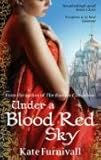
Under A Blood Red Sky/The Red Scarf by Kate Furnivall

Under a Blood Red Sky
Genre: Historical Fiction

Copyright: 2008

Pages: 512

Rating:

Rating 4 Crowns

At its heart is an intense love story. But it is also driven by the powerful bonds of friendship between two young women, Sofia and Anna.

They are imprisoned in Davinsky Labour Camp, Siberia 1933. When Anna falls gravely ill, Sofia makes a promise to escape the camp and find Vasily, Anna’s childhood love. Her perilous search takes her to a remote Urals village where she discovers a web of secrecy and lies, but also bonds of courage and loyalty – and an overwhelming love that threatens her promise to Anna.

As Stalin’s fist squeezes ever tighter, Sofia is tantalisingly close to freedom, family – even a future. All that stands in her way is the secret that could endanger everything...


Okay, I admit it. I bought this book for the cover. I knew nothing about the author or her previous works, I was just drawn to it for the shallow appreciation of some beautiful cover-art. Because, hey, with a cover like that, it has to be a good book. Right?

Right. It turned out to be a very enjoyable read and definitely lived up to the promise that gorgeous cover makes. It is a story that understands women and shows us for the incredibly loyal and incredibly complex creatures that we are. The friendship of Sofia and Anna showed what I alredy knew in my deepest heart to be true - that women are capable of carrying each other through the most unspeakable attrocities. It showed that although the body can be starved for food the heart can still remain full up on hope and love alone.

The layers of this novel are complex and I admire the way Furnivall sketched so finely not just the political climate but the people of Russia. In a world gone mad with so much rich and fascinating history it would be easy for an author to loose sight of her characters...especially the minor ones. But Furnivall doesn't seem to struggle with this. All of the people that inhabit her novel have real heart.

And while I have just lavished all this praise on the book, I have to be completely honest and say that from about page 300 to 400, I wanted to put it down. There seemed to be a 100 page section where the plot wasn't moving fast enough and the love story, which is a major element to this book, wasn't working for me. It had a fantastic beginning but by the middle I wasn't sure if I liked it anymore. So I really wasn't sure until the final page what rating I was going to give it.

I am so glad I got to the last page though! It had a fantastic finale and some really unpredictable plot points. Don't you just love it when a plot can surpise you like that without seeming cliched? For that reason, I would recommend reading this book fast. Don't spread it out over a week, read it over two days so you don't feel tempted to set it aside. You'll be kicking yourself if you do. Kate Furnivall is a smart author and every seed she plants in this novel is for a reason...and you don't want to miss the garden she grows from it!

Princess of the Past

Visit Annie @ her blog Reading, Writing & Ranting

Friday, September 25, 2009

The Virgin's Daughters by Jeane Westin

Genre: Historical Fiction

Copyright: 2009

Pages: 416

Rating:
Rating 4 Crowns

Summary: The Virgin’s Daughters tells the story of Katherine Grey and Mary Rogers, two ladies-in-waiting for Queen Elizabeth I. Both women were close to their monarch, though they served at different times and ultimately their tales would end very differently.

Lady Katherine Grey is sister of the infamous Nine Day’s Queen, Jane Grey, and cousin to Elizabeth. As stated in King Henry VIII’s will, Katherine is next in line for the crown, however her ambition towards the throne is pretty much non-existent. She has seen what ambition cost her family with the execution of her sister and she will in no way be a pawn for those seeking to replace the Queen.

Katherine’s quiet contentedness with her role in life is blown to smithereens when she meets and falls in love with Edward Seymour (Ned), brother of Jane Seymour (Henry VIII’s 3rd wife). Elizabeth is quick to let them know that there is no way she will ever consent to their marriage – they both have strong claims to the throne and should they conceive of a male heir Elizabeth’s crown could be in great danger from those wanting to depose the Protestant Queen.

Ned and Katherine defy the royal orders and marry in secret, an action that leads them both to the Tower. To say that Elizabeth is enraged would be putting it mildly. For one thing, she is in fear of losing the crown she fought so hard for and for another, since she can’t have the man of her dreams, neither can her ladies. But in the end, will Elizabeth join sides with love and give her blessing to the marriage?

Mistress Mary Rogers has been dreaming of the day when she would be a lady-in-waiting to Queen Elizabeth and finally joins the Queen’s household towards the end of Elizabeth’s reign. As a child she had heard tales of Elizabeth’s Court from her father’s ward, Lady Katherine Grey and is now ready to put those lessons to test. As Mary reluctantly falls head over heels for John Harington, the Queen’s godson, she realizes that she is headed the way of Lady Grey, but true love chumps all and the couple is left with quite a dilemma. Will Elizabeth concede to the union? Now that the monarch is ailing, has her heart softened to love or will her bitterness reign until the end?

My thoughts: I confess to not being totally geeked out about another novel on Elizabeth I, even if she is my favorite monarch. But to my surprise, I rather enjoyed it. The writing is good – not quite Sharon Kay Penman writing – but fluid, insightful and entertaining. I personally feel that Elizabeth wasn’t the total bitch as she was portrayed here, but she makes a great villain (if not exaggerated). As to Katherine and Mary, I am glad to have read the stories of these two obscure, but interesting women of history.

Recommended to any historical fiction or Tudor lover!


Visit Amy at her blog Passages from the Past

The Birth of Venus by Sarah Dunant

Pages: 391

Copyright: 2003

Genre: Historical Fiction

Series: Renaissance Trilogy

Rating:
Rating 4 Crowns

Once again, Sarah Dunant spins a masterful tale of life long ago, starting in Florence in the 1480's. We enter the life of Alessandra Cecchi, a 14 year old girl who is sadly, too developed for her time. She loves to learn, speaks multiple languages, has no talent for dancing, and above all, she loves art.

Alessandra has inherited her love of color from her father, a clothing merchant renowned for his vibrant cloths and she yearns for the secret of color. While most young women learn to sew and prepare to be mothers, Alessandra sketches scenes from the bible and other images she can conjure up in her mind. She yearns to explore the beautiful city she lives in, to feel what it must be like to be a man in a time of great change, both politically and culturally.

One evening, her father brings home a young painter, someone to paint the family chapel as well as commit them all to canvass for history to see. A young man with great talent, someone Alessandra cannot avoid and hopes to learn from. A man who will change her life. Together they will question if God can be reached through art, or if art itself is a sin as the new fiery monk of the city proclaims it is.
As it becomes clear that Alessandra is close to womanhood, a choice must be made - enter a convent and never have the ability to explore her creativity, or let her parents find a husband who may understand her a bit. She chooses the latter, a move that will affect her future, more than she could ever guess.

We go on this journey with Alessandra, through the rest of her life, the twists and turns and decisions she must make to create a life she has always wanted. In the meantime, the city is exploding outside the walls of her home, and Alessandra is unable to explore the freedom she sought so hard...it is taken away as suddenly as it is given.

I never wanted to put this book down, and even though we do follow Alessandra through virtually her entire life, I am still yearning for more. It's a beautiful story, and although I disagreed with some of her decisions, I was compelled to continue on this journey with her. I loved the book, and my only disappointment is that it ended too soon.


Lady in Waiting
Thanks to Crystal from I Totally Paused for this wonderful guest blogger review!

Thursday, September 24, 2009

The Greatest Knight by Elizabeth Chadwick


Genre: Historical Fiction

Copyright: 2005

Pages: 560

Rating:
Rating 5 Crowns

Royal protector. Loyal servant. Forgotten hero.

A penniless young knight with few prospects, William Marshal is plucked from obscurity when he saves the life of Henry II's formidable queen, Eleanor of Aquitaine. In gratitude, she appoints him tutor to the heir to the throne, the volatile and fickle Prince Henry. But being a royal favorite brings its share of danger and jealousy as well as fame and reward.

A writer of uncommon historical integrity and accuracy, Elizabeth Chadwick resurrects the true story of one of England's greatest forgotten heroes in a captivating blend of fact and fiction. The Greatest Knight restores William Marshal to his rightful place at the pinnacle of the Middle Ages, reflecting through him the triumphs, scandals, and power struggles that haven't changed in eight hundred years.


In this rich tapestry of medieval life Chadwick chronicles the life of William Marshal 'one of Englands's greatest forgotten heroes' from humble origins through his service to 4 kings & finally as Regent of England. Marshal is loyal to those he pledges his fealty even in the face of death, a rare commodity in an age where many men switched allegiance to suit themselves. He was well known and loved as a chivalrous knight & for his success on the tourney circuit.

When his older brother John inherits the family lands, William travels to Normandy to train as a knight and earns a place in his uncle's household. Here he saves Eleanor of Aquitane from capture by enemy knights & in her gratitude she assigns William tutelage of Prince Henry, heir to the throne. Upon the death of Henry II, Richard impressed with William's loyalty requests that William serve him. For his loyalty and courage William is rewarded with the hand in marriage of Isabelle de Clare (an Anglo-Irish heiress.) Their marriage offers Isabelle freedom (she has been a ward of the Crown for 3 years) & William financial security. Their match which begins as one of expediency soon becomes much more - William refers to Isabelle as his "safe harbour".

The Greatest Knight is a seamless blend of fact & fiction. Elizabeth Chadwick, embellishes those parts of William's life not covered by the biography of his life, the HISTOIRE DE GUILLAUME LE MARECHAL, but in a manner she trusts is consistent with the man's personality and achievements. It was an absolute delight to learn more about this fascinating man, a man of high integrity & morals, loyal character & courageous nature.

I'm really looking forward to reading the next chapter in William's life - The Scarlet Lion.


Visit Elizabeth Chadwick's blog Living the History and her website for information on all the author's novels and some fascinating reading about William Marshall.

For those interested in learning more about William Marshal check out the website created by Gerry Kissell; it is simply amazing. Gerry spent almost 30 years researching William Marshal.


Empress Signature
Visit Teddyree at her blog The Eclectic Reader

Wednesday, September 23, 2009

In the Company of the Courtesan by Sarah Dunant

Pages: 361

Copyright: 2006

Genre: Historical Fiction

Series: Renaissance Trilogy

Rating:

Rating 3 1/2 Crowns

Rather than a tale of virtue and youth, this time Sarah Dunant brings us a journey of love and betrayal, prostitution and loyalty.

We meet our main characters, a courtesan called Fiammetta and her dwarf assistant Bucino in the height of their prowess in Rome. But alas, the city falls to invading forces and these two are barely able to escape with their lives. As we accompany them on their journey to Venice and watch as they are forced to start a new life, we are taken to a world the author has not shown us before.

I read Sarah Dunant's books in half reverse order, her tales of convents and virtuous women coming before this one. And perhaps that is why, as much as I did like this book, I did not fall in love with it as I did her others. The tale is told from the perspective of Bucino, and he is charming enough, but he is not a lovely young lady.

The book tells most of the story between their downfall in Rome through their fortunes in Venice. What I found myself really wanting was more of a history of Fiammetta, rather than the little bits of background we get through other means. Because I feel that Sarah Dunant is so good at telling these things from the beginning, I wanted to see the roots of a courtesan life. What is it like to be brought up by your own mother to service men until you are too old to continue doing so? Does the courtesan ever wish for a different life, try to find a way out?

Yet, because I have read so much about marriages during this time period, it was very interesting to read a story of the semi-alternative. All lives are run by men in this time period, but to an extent, the life of a courtesan seems a little more free. Fiammetta is able to run her household basically as she wishes, and it's refreshing to see that as much as she can, she makes her own fate.

I admire the author sticking to history as much as she can, and perhaps one of my favorite parts is her "Author's Note" at the end. It's a nice tie-in between real life and the fiction she has spun for us.

On the whole, it is a good book and one I'm glad to have in my collection, for I will undoubtedly read it again.


Lady in Waiting
Thanks to Crystal from I Totally Paused for this wonderful guest blogger review!

Tuesday, September 22, 2009

Through a Glass Darkly by Karleen Koen

Genre: Historical Fiction

Copyright: First published 1986, reprinted 2003

Pages: 674

Rating:
Rating 5 Crowns

This is such a fantastic historical novel set in 1715-1720. Most of the historical fiction I read are about Royalty, this book is more along the lines of Elizabeth Chadwick in that it contains mentions of various Royal figures but they aren't a main part of the storyline.

The book is about a beautiful naive 15 year old girl who is used by her mother to get out of debt by selling her off to the highest bidder in marriage. Barbara Alderley loves and adores Roger Montgomery as only a 15 years old girl can, so when her mother sells her in marriage to Roger she is delighted despite her Grandmother's reservations because he is so much older than her.

After the marriage takes place Roger moves Barbara with him to France where he ultimately renews his affair with the King of France. Despite her extreme heartache Barbara never stops loving Roger. This is a dark and twisted novel, a close look at the ugly side of society that you won't be able to put down.

I absolutely loved this book and can't recommend it highly enough. Karleen Koen's writing just flows so beautifully! It is different from other historicals that I've read and I was completely caught up in the story.

The good news is that there is a sequel and a prequel to this book. When I looked up the book and discovered it was first printed in 1986 I was worried there would be nothing else from this author. However, I was in luck because the prequel to this book, Dark Angel was written in 2007. The sequel, Now Face to Face was first published in 1996. Karleen Koen has a beautiful website that you can read for information about these books including family trees and upcoming releases.

Queen Signature

Visit Alaine at her blog The Queen of Happy Endings.

Monday, September 21, 2009

Sacred Hearts by Sarah Dunant

Pages: 400

Copyright: 2009

Genre: Historical Fiction

Series: Renaissance Trilogy

Rating:

Rating 4 Crowns

In the year 1570, we descend on the beautiful town of Ferrara and the convent Santa Caterina. Convent life is peaceful and strict, designed to bring discipline and ultimately happiness into the lives of the women who live there.

But what if you never wanted to go to a convent? In this time, there are really two kinds of women - those intended for marriage, and those bred for the veil. Novice Serafina is clearly one who was meant for marriage, and by a twist of fate ends up inside the walls of Santa Caterina. We follow her on her journey to make a decision: does she relent and accept convent life, or does she rebel and insist on the life she really wants?

Sacred Hearts is a touching and satisfying look at convent life in the mid-sixteenth century. We come face to face with the kind of life and choices ladies in this day and age are completely separated from. No one has to worry about either being forced into marriage or a religious life, wondering if our parents will have enough of a dowry to get an acceptable husband. I spent much of the book imagining what it would be like to be forced into one life or the other, and wondering which one I would have hated more.

I found this a heartbreaking look into the choices, or lack-there-of, for women in this time period. It's so hard to even imagine being forced into a marriage you don't want, but even worse to think you could be stuck in a convent against your will. Women had so few options, and young girls were at the mercy of the decisions their fathers made. Even when you've entered the convent, ultimately you are at the mercy of the hierarchy of the Catholic church, in a time when women were considered little more than property.

The book also does a good job of showing that sometimes, the convent really is the only option for some women - whether they have forbidden knowledge or birth defects that would prevent them from any other kind of life, the convent is the only home they will ever be able to know. Instead of being a prison for these women, it's an institution of safety and the only place they can really be themselves. And despite the isolation of the convent, you find similar problems inside as you would out, especially when what happens in the outside world can spill over.

I loved the characters, and found myself wishing I could know some of them, specifically Suora Zuana. I became wrapped up in the lives of these characters, yearning for them to be happy, whatever that may mean for each of them individually. For a short time, they became my sisters and I'm grateful for the opportunity to watch their lives unfold.

An all around great book that I would definitely recommend to anyone who likes historical fiction!

Lady in Waiting
Thanks to Crystal from I Totally Paused for this wonderful guest blogger review!

Sunday, September 20, 2009

The Sunday Post

This Week @ Royal Reviews

We have another Historical Fiction week coming up on Royal Reviews this week. This week will historical fiction reviews from Queen of Happy Endings, Empress of Good & Evil, Princess of the Past and Guest Blogger Crystal from I Totally Paused! From Russia to England, this week will feature an eclectic mix of historical fiction from authors you've certainly heard of and authors you may have considered trying.

PS We met (and loved) Richelle Mead last week! Stay tuned for photos next Sunday.

Competition Winners


Winner of Some Girls Bite:

Congratulations Mishel @ Mis(h)takes

Winner of Nice Girls Don't Date Dead Men:

Congratulations Ibeeeg @ Mom Musings

Winner of Troy on DVD:

Congratulations to Heatherzilla

Princess of the Past

Saturday, September 19, 2009

Warrior's Princess by Barbara Erskine

Category: Historical & Contemporary Paranormal (Dual time lines)

Pages: 560

Copyright: 2008

Rating:

Rating 4 Crowns

Book Blurb

Jess, a teacher in London, is attacked by someone she fears knows her well. Fleeing to her sister's house in the Welsh borders to recuperate, she is disturbed by the cries of a mysterious child.

Two thousand years before, the valley below the house is the scene of a great battle between King Caractacus, leader of the British tribes, and the invading Romans. The proud warrior is captured and taken as a prisoner to Rome with his wife and daughter, the princess Eigon.

Jess is inexorably drawn to investigate Eigon's story, and as the Welsh house ceases to be a peaceful sanctuary she decides to visit Rome herself. There lie the clues that will unravel the mystery of Eigon's astonishing life - but which threaten to draw in ever more closely Jess' own tormentor. Compelled to follow Eigon's journey as she grows from disoriented girl into a striking woman with the powerful gift of healing, Jess, like her heroine and nemesis, takes

risks which put her and all who love her in terrible danger.

Review

When anyone ever asks me that difficult 'who's your favourite author' question, I always answer Barbara Erskine. She's the writer I credit with giving me a love/obsession with the history of the United Kingdom and the time-slip novel. She's a master story teller who always writes about women who are on a turbulent inner-journey. The historical characters who populate her novels are people whose emotions are so powerful and experiences are so traumatic they reach forward from the past and infiltrate the life of the heroine in the present. It's magic!

Needless to say, I approached writing my first Barbara Erskine review with caution because there had been so many Amazon reviews that compared this novel to the author's first and most popular novel, Lady of Hay. The fact is, it isn't Lady of Hay but it is one amazing novel in its own right and because of that, does not deserve the comparison. This book is gutsy, edgy, historical, contemporary and paranormal - an author who successfully achieves this deserves the accolade!

If you're ready to try something just a little bit different with your ancient historicals then sink your teeth into Rome during the time of the Emporer Nero. This was an incredible time in history when Christians were murdered for their controversial belief in just one God. Climb down into the pit with the terrified and defenseless and experience the horror of the Gladiator arena, discover the Emporer's motivation for his grissly 'Roman Candles' and the persecution of St Peter. But most of all, take the opportunity to see the world through the eyes of Eigon, a captive Celtic Princess and Erskine's historical central character. She is flawed and damaged but within an inspiring inner-strength.

She is a perfect match for the modern-day central character, Jess. Actually, Jess is the reason I believe so many reviewers have compared this book to Lady of Hay. Erskine did a fantastic job of writing a modern-day storyline that was as interesting as her historical one. She pulled off a perfect marriage of plot-lines. If she was writing in the present she'd end on a cliff-hanger and flip to the past and vice versa. Very clever, very effective and very Erskine.

The ghost story element in this novel is strong (this seems to be the author's adopted style since House of Echoes) however I didn't find it too suspenseful. It kept me turning pages but wasn't an intimidating read that gave me nightmares and left me traumatised....I couldn't read it if it was! If you are concerned or uncomfortable with the ideas of spirits, reincarnation, psychics etc then take that into consideration before reading this novel. If you're like me and are a little fascinated by these topics, then pick up this book!

If you haven't started reading Barbara Erskine before, I recommend reading Kingdom of Shadows or Lady of Hay. Her books are stand alone titles mostly if you'd prefer to find so
find something that appeals. Barabara Erskine doesn't just write about people, she writes about the invisible threads that connect us all and I do love to wrap myself in her tangled web.

Visit Barbara Erskine @ her website or follow her on Twitter!


Princess of the Past

Visit Annie @ her blog Reading, Writing & Ranting

Friday, September 18, 2009

Wolfskin by Juliet Marillier


Series: Saga of the Light Isles Book 1

Genre: Historical Fantasy

Copyright: 2002

Pages: 707

Rating:
Rating 4 1/2 Crown


All Eyvind has ever wanted is to become one of the greatest Viking warriors - a Wolfskin. His friend Somerled, with whom he has sworn a blood oath of lifelong loyalty, secretly desires a very different path.

A world away, Nessa, niece of King Engus of the Folk, is learning the ways of the mysteries. Her people live in peace and harmony, until a voyage of discovery, led by Somerled's much respected brother, Ulf, brings a group of settlers to Nessa's homeland. Though their arrival is friendly, Nessa feels a shadow has been cast over the Folk ... book cover

Wolfskin is a powerful historical fantasy of epic proportions set against a backdrop of the Viking world and the colonisation of the Scottish islands of Orkney. The combination of history, folklore, & imagination is utterly captivating.

Wolfskin follows the destinies of three central characters - the Viking warrior Eyvind, would-be king Somerled and Priestess Nessa. Eyvind has grown up with the dream of becoming a Wolkskin warrior of Thor, like his brother. He is set the task of befriending the strange boy Somerled and although Eyvind often fears Somerled's cruel and unpredictable nature, circumstances draw the boys together in friendship and they eventually swear their lifelong brotherhood with a blood bond. Their journey to the Light Isles reveals long denied truths and sets the scene for a page-turning read.

Eyvind and Nessa are wonderfully drawn characters, sensitively portrayed & I fell in love with both of them. The love story between the two is a relatively slow dance but beautiful just the same. Somerled is the character you love to hate, although his portrayal is also done in such a way that it is possible to see his vulnerability.

Marillier's connection to the natural world is a beautiful one, nothing is contrived or exaggerated. The imagery is so vivid I felt like I'd been transported to the Light Isles & immersed in the character and very soul of these islands.

Was not this a realm of endless, freezing darkness, visited by hellish winds, pounded by nightmare seas, a stark, empty place where scarcely a tree dared lift its branches from the earth to soften the bleak landscape?
Then spring would come ...

Here the sky held more colours than there were blades of grass on the hillsides; here the sea was endlessly changing, moody, bountiful, capricious, a shawl of mystery wrapping these fair islands with its fluid touch. Each stone bore its own story, each shell its own pattern, each flower its enchantment.
page 178

This is definitely a tale of contrasts, blossoming love & brutal battle scenes alternately bleak then mesmerising. Wolfskin examines the value in loyalty, the pain of betrayal, and the strength required to do what is right at the expense of love. I'm looking forward to continuing the story with Foxmask

Visit Juliet Marillier's website to find out more


Empress Signature
Visit Teddyree at her blog The Eclectic Reader

Wednesday, September 16, 2009

Michelle Moran - Guest Post

We'd like to welcome Michelle Moran to Royal Reviews for a special guest post about the inspiration behind her bestselling historical fiction novels.


Michelle:


For every novel I have written, I can look back and say that there has been a very specific moment of inspiration - usually in some exotic locale or inside a museum - where I’ve said, “Aha! That’s going to be the subject of my next novel.” I never began my writing career with the intention to write books about three different princesses in Egypt. In fact, I had no intention of writing about ancient Egypt at all until I participated in my first archaeological dig.

During my sophomore year in college, I found myself sitting in Anthropology 101, and when the professor mentioned that she was looking for volunteers who would like to join a dig in Israel, I was one of the first students to sign up. When I got to Israel, however, all of my archaeological dreams were dashed (probably because they centered around Indiana Jones). There were no fedora wearing men, no cities carved into rock, and certainly no Ark of the Covenant. I was very disappointed. Not only would a fedora have seemed out of place, but I couldn’t even use the tiny brushes I had packed. Apparently, archaeology is more about digging big ditches with pickaxes rather than dusting off artifacts. And it had never occurred to me until then that in order to get to those artifacts, one had to dig deep into the earth. Volunteering on an archaeological dig was hot, it was sweaty, it was incredibly dirty, and when I look back on the experience through the rose-tinged glasses of time, I think, Wow, was it fantastic! Especially when our team discovered an Egyptian scarab that proved the ancient Israelites had once traded with the Egyptians. Looking at that scarab in the dirt, I began to wonder who had owned it, and what had possessed them to undertake the long journey from their homeland to the fledgling country of Israel.

On my flight back to America I stopped in Berlin, and with a newfound appreciation for Egyptology, I visited the museum where Nefertiti’s limestone bust was being housed. The graceful curve of Nefertiti’s neck, her arched brows, and the faintest hint of a smile were captivating to me. Who was this woman with her self-possessed gaze and stunning features? I wanted to know more about Nefertiti’s story, but when I began the research into her life, it proved incredibly difficult. She’d been a woman who’d inspired powerful emotions when she lived over three thousand years ago, and those who had despised her had attempted to erase her name from history. Yet even in the face of such ancient vengeance, some clues remained.

As a young girl Nefertiti had married a Pharaoh who was determined to erase the gods of Egypt and replace them with a sun-god he called Aten. It seemed that Nefertiti’s family allowed her to marry this impetuous king in the hopes that she would tame his wild ambitions. What happened instead, however, was that Nefertiti joined him in building his own capital of Amarna where they ruled together as god and goddess. But the alluring Nefertiti had a sister who seemed to keep her grounded, and in an image of her found in Amarna, the sister is standing off to one side, her arms down while everyone else is enthusiastically praising the royal couple. From this image, and a wealth of other evidence, I tried to recreate the epic life of an Egyptian queen whose husband was to become known as the Heretic King.

Each novel I’ve written has had a similar moment of inspiration for me. In many ways, my second book, The Heretic Queen is a natural progression from Nefertiti. The narrator is orphaned Nefertari, who suffers terribly because of her relationship to the reviled "Heretic Queen". Despite the Heretic Queen's death a generation prior, Nefertari is still tainted by her relationship to Nefertiti, and when young Ramesses falls in love and wishes to marry her, it is a struggle not just against an angry court, but against the wishes of a rebellious people.


But perhaps I would never have chosen to write on Nefertari at all if I hadn't seen her magnificent tomb. At one time, visiting her tomb was practically free, but today, a trip underground to see one of the most magnificent places on earth can cost upwards of five thousand dollars (yes, you read that right). If you want to share the cost and go with a group, the cost lowers to the bargain-basement price of about three thousand. As a guide told us of the phenomenal price, I looked at my husband, and he looked at me. We had flown more than seven thousand miles, suffered the indignities of having to wear the same clothes for three days because of lost luggage… and really, what were the possibilities of our ever returning to Egypt again? There was only one choice. We paid the outrageous price, and I have never forgotten the experience.


While breathing in some of the most expensive air in the world, I saw a tomb that wasn't just fit for a queen, but a goddess. In fact, Nefertari was only one of two (possibly three) queens ever deified in her lifetime, and as I gazed at the vibrant images on her tomb - jackals and bulls, cobras and gods - I knew that this wasn't just any woman, but a woman who had been loved fiercely when she was alive. Because I am a sucker for romances, particularly if those romances actually happened, I immediately wanted to know more about Nefertari and Ramesses the Great. So my next stop was the Hall of Mummies at the Egyptian Museum in Cairo. There, resting beneath a heavy arc of glass, was the great Pharaoh himself. For a ninety-something year old man, he didn't look too bad. His short red hair was combed back neatly and his face seemed strangely peaceful in its three thousand year repose. I tried to imagine him as he'd been when he was young - strong, athletic, frighteningly rash and incredibly romantic. Buildings and poetry remain today as testaments to Ramesses's softer side, and in one of Ramesses's more famous poems he calls Nefertari "the one for whom the sun shines." His poetry to her can be found from Luxor to Abu Simbel, and it was my visit to Abu Simbel (where Ramesses built a temple for Nefertari) where I finally decided that I had to tell their story.

It’s the moments like this that an historical fiction author lives for. And it probably wouldn’t surprise you to learn that my decision to write Cleopatra’s Daughter came on an underwater dive to see the submerged city of ancient Alexandria. Traveling has been enormously important in my career. My adventures end up inspiring not only what I’m currently writing, but what I’m going to write about in the future.


Visit Michelle Moran @ her Official Website or @ her blog History Buff

Order your copy of Cleopatra's Daughter from Amazon or Book Depository (free postage worldwide).


***GIVEAWAY ALERT***
Don't forget to enter here to win a copy of Michelle Moran's latest novel - Cleopatra's Daughter

Tuesday, September 15, 2009

Q & A with Michelle Moran


Michelle Moran's name on the cover of a novel is a promise of an exceptional read - her stories will echo in your mind days after you finish the last page. Queen of Happy Endings, Empress of Good & Evil and I have been massive fans since reading Nefertiti last year. You can read our reviews of Nefertiti and The Heretic Queen by clicking here.


Q & A with Michelle Moran

ON WRITING

Have you always wanted to be a writer?

Yes. Some authors come to writing by chance, some after graduating college or working for a while. For me there was never any doubt about what I would do as a career. I think my teachers felt the same way. I can remember being in third grade with the toughest teacher in the world and hearing her voice echo in my mind like a scene from Ferris Bueller's Day Off. "Michelle... Michelle.... Michelle?" Only I wasn't physically absent like Bueller. Just mentally! When I write, the scene unfolds in my mind like a movie, only I'm the director. I can listen to characters' dialogue, then tell them to stop, do it over, say the words differently, or strike a different pose. In an academic setting this can be a problem, because instead of learning Algebra I'm watching a movie, only it's a movie with endless possibilities because I create the scenes.

How long did it take you to get published?


My first attempt at getting published was in seventh grade, when I was twelve. So I guess I can say it took me fifteen years. I had written a full length book that was certainly pathetic but everyone praised it and my father hailed it as the Next Great American Novel. My father was very good at ego-boosting. But no one knew how to go about getting published, so I went to my local Barnes and Nobles and asked them how. And instead of laughing, the bookseller took me to the writing section and I purchased the current edition of Writer's Market. From then on, no agent or publishing house was safe. I learned how to write query letters and regaled them all. And by the time I was fifteen some agents sent personal letters back, probably because I had included my age in the query letter and they either thought a) this kid has potential or b) this is sad and deserves at least a kind note. I went on to write eleven more books before writing Nefertiti, which would eventually sell to Random House.

Any advice to aspiring writers?

Keep writing. If at any point along the way I had stopped writing and said to myself, you know, I think book number eleven will be my last, I wouldn't be published. Writers don't like to hear this, though. I know when I was looking at writing advice and I would see this posted somewhere I would think, well that's helpful. I wouldn't have thought of that. But the truth is there's no good-ol-boys-club and there's no backdoor into the publishing industry (unless you're already a star). Good work sells, and if it doesn't, write another one, then maybe once you're a success they'll haul out all of your old books that weren't worth publishing the first time around, spruce them up a little, and voila, all of your previous efforts won't have been wasted. Or maybe you'll look back on those books and think, wow, they knew something I didn't. My work has gotten better. And then you'll hide those first eleven books in a closet somewhere (or a craftily labeled folder in My Documents so that no one ever finds them).

ON HER LATEST NOVEL - CLEOPATRA'S DAUGHTER

What prompted you to write a novel about Cleopatra’s daughter?


I do a great deal of traveling both for research and for fun, and most of my destinations are archaeological sites. On a trip to Alexandria in Egypt, I was afforded the amazing opportunity of participating in a dive to see the submerged remains of Cleopatra’s ancient city. More than ten thousand artifacts remain completely preserved underwater: sphinxes, amphorae, even the stones of the ancient palace. Although I'm not a fan of diving, it was an incredible experience, and it changed the way I looked at Cleopatra. I immediately wanted to know more about her life, and it was mere coincidence that my next trip took me to Italy, where her ten year-old children were brought to live after her suicide. While in Rome, I was able to retrace her daughter's steps, and upon seeing where her daughter had lived on the Palatine, I knew I had my next novel.

What was it like to walk where Selene walked? In particular, what was it like to visit Octavian’s villa?

Unbelievable. For two thousand years, Octavian’s villa has sprawled across the top of the Palatine Hill, slowly deteriorating. At one time, its vibrantly painted dining room had hosted magnificent feasts, one of which would have been the celebration of the emperor’s triumph over Marc Antony and Cleopatra in Egypt. As the heir to Caesar, Octavian was determined to rule the western world without interference. He changed his name to Augustus, and with the help of his general Agrippa and his architect Vitruvius, he turned a city of clay into a city of marble.

I had known all of this on that day in March when the villa was opened for the first time in more than a century. What I hadn’t known, however, was just how unbelievable that trip back into the world of ancient Rome would be. After three million dollars in restoration, Italian archaeologists have been able to recreate not just the intimate library and studies Augustus used, but the mosaic floors he once walked on and the vividly painted ceilings he once walked beneath with Ovid, Seneca, Cicero, Horace, and even Julius Caesar himself. As we were quickly escorted through the frescoed rooms, we stopped in the triclinium – the dining room which had once seen so many famous faces smiling, laughing, even crying for mercy. With a little imagination, it was easy to see the tables and couches that had once adorned the chamber, and there was the undeniable feeling of standing in the presence of the ancients. It was the kind of feeling you only get in Grecian temples or Egyptian tombs.

In all three of your novels, your narrators have been teenage girls. Is there are reason for this?

Actually, yes. I like to begin my novels during the time of greatest transition in a person’s life. And in the ancient world, the greatest transition in a woman’s life was often the time when she was married. Because women married at much younger ages two thousand years ago (twelve years old was not uncommon), my narrators have all been very young girls. In fact, Random House will be making a concerted effort to market Cleopatra's Daughter to young adults as well as adults. However, as my novels progress through time (my next book, for example, will be about Madame Tussaud), my narrators will be older.

Is the Red Eagle based on an historical person?

Yes. The Red Eagle is actually based on several men who led slave rebellions (unsuccessfully, I might add) against Rome. Spartacus led the most famous revolt, but there were other men too, such as Salvius, who waged war with his army of slaves in ancient Sicily.

You write in your acknowledgements page that the character of the Red Eagle is an homage to the works of several authors. What made you decide to do this?

Creative as well as personal reasons. First, I wanted to create a character that fans of swashbuckling adventures might love, and it wasn’t at all difficult to find historical personalities on which to base such a hero. Men like Spartacus and Salvius were heroes in the truest sense of the word. But I didn’t want there to be too much action, and certainly not so much that it would detract from the real story – that of Selene and her twin brother Alexander growing up in a foreign court. I could certainly have chosen not to include anything as obviously fictitious as the Red Eagle. But I wanted to illustrate just how threatening slave rebellions were at that time, and how ever-present the danger of becoming a slave would have been, even to captured royalty. And the creation of the Red Eagle wasn’t a huge stretch. Many rebels who came before – and after – the Red Eagle employed similar tactics: rousing the plebs, arming the slaves, and encouraging those in servitude to passive resistance.

On a more personal note, however, I wanted to include the Red Eagle because I knew it would be a character my father would have loved. He devoured anything having to do with ancient Rome, and I deeply regret not having written this while he was still alive.

Was a third of Rome’s population really enslaved?

Sadly, yes. And you didn’t have to be born a slave to become one. You could be kidnapped and sold into slavery, your city could be overrun and you could be turned into a slave, or you might be sold into servitude by your own parents. Slavery meant an absolute loss of every human right we now take for granted, and as a slave, your body was no longer your own. Many slaves were physically and sexually abused, regardless of age or gender.

Where did these slaves come from?

Many were Gallics and Greeks. The Gallics were from Gaul, a region which now encompasses France, Belgium, parts of Switzerland, and Germany.

When did slavery end?

It hasn't. In the Western World, it was slowly - very slowly - phased out with the coming of Christianity (which was one of the reasons Christianity flourished… it appealed to the disenfranchised and enslaved, making everyone equal if not on earth than in the next life). But slavery certainly hasn't ended for everyone. There are women and children who are enslaved today, even in America and Europe. Of course, this isn't legal. Many of these victims of modern-day human trafficking have been brought over from places like Albania or Algeria and have no resources to escape. That's why organizations such as STOP International exist. You can visit them
here.

Why did you change Cleopatra Selene’s name to Selene in the novel?

I thought it would be nice (and easier for the reader) to differentiate Selene from her mother by calling her by her second name. Selene means moon, while her brother – Alexander Helios – was named after the sun. Very pretty, I think!

Is it still possible to visit the places Selene visited when she was in Rome?

Yes. In 2008, I went on a photographic safari in search of the places Selene would have gone during the brief years she was in Rome. Many of the photos are included here!

In the novel, Cleopatra leaves her children with Octavian before she commits suicide. Why would she have done this?

Cleopatra knew that her children would stand a better chance of survival if they were given to Octavian directly. He had already slaughtered her eldest son Caesarion, but the twins were so young that to kill them would have seemed merciless, and she knew that the Romans would have derided him for a child-killer. Historically, they probably stood their only chance of survival with him. Remember the old saying, Keep your friends close and your enemies closer? In the novel Cleopatra correctly assumes that so long as Octavian can watch over her children they'll be safe. If they are outside of Octavian's control, however, he will hunt them down for fear that they may be used as rallying points for rebellion.

ON HER NEXT BOOK - MASKS OF THE REVOLUTION

You mentioned that your next book - Masks of the Revolution - will be about Madame Tussard - Can you reveal why you've decided to depart from writing about Ancient History?

This was solely a case of inspiration. I don't think this is a permanent move away from the ancient world, but when I learned about the life that Madame Tussaud led, it was a story I simply couldn't pass up. Marie (the first name of Madame Tussaud) joined the gilded but troubled court of Marie Antoinette, and only survived the French Revolution only by creating death masks of the beheaded aristocracy. I’m very excited about this novel, since Marie met absolutely everyone, from Thomas Jefferson to Robespierre and the Empress Josephine.

JUST FOR FUN - THE ROYAL QUESTION

If you could be any Royal figure, who would it be and why?

Wow. That's a really difficult one. I'm wracking my brain trying to think of someone royal who actually had a happy life! Perhaps Katherine Swynford, who eventually married her true love John of Gaunt. But then he died only a few years later. This is the problem with living in the past - short lifespans!


Visit Michelle Moran @ her Official Website or @ her blog History Buff

Order your copy of Cleopatra's Daughter from Amazon or Book Depository (free postage worldwide).


Princess of the Past

Visit Annie @ her blog Reading, Writing & Ranting

Winners of A Bloody Good Cruise by Diana Rubino

Congratulations to the following bloggers who have won a copy of A Bloody Good Cruise by Diana Rubino:

Paperback Copy:

Kalynnick @ Book Freak

E-Copies:
K @ Slip Carefully
Razlover @ Razlover’s Book Blog
Mystica @ Mystica - Musings from Sri Lanka
Ladybug @ Escape in a Book
Wanda

Thanks to Diana and everyone who entered and helped make Vampire Week such a success!

Monday, September 14, 2009

Win Troy on DVD

This has to be one of my favourite movies - it's just got such an epic feel to it! Plus, it also has Brad Pitt. If you have two minutes, check out the trailer below. It made me want to go turn on my DVD Player!


Here's how to enter:

1) Just leave a comment on this post with an email address for an entry ~ no email, no entry!
2) + 2 if you post about this giveaway on your blog, sidebar, tweet etc.
3) Competition is open to followers of this blog (if you're not a follower then click on the follow button in the right hand column.)
4) Competition is open internationally.
5) Competition ends Saturday 19th September, winner will be announced on this blog in the Sunday Post.

Helen of Troy by Margaret George

Genre: Historical Fantasy

Pages: 747

Copyright: 2006

Rating:

Rating 3 1/2 Crowns


Helen of Troy
held great promise and had the ability to be a fantastic book. For the first 200 pages, I was enthralled with the life of this beautiful woman who held such power in mythology. The writing was so beautiful that it held its own rythym - I truly felt like I had closed my eyes and opened them in Sparta.

In the tradition of the epic historical fiction Margaret George is renowned for, Helen of Troy follows Helen from her early childhood right through the Trojan war and onto her eventual death. I've classed it as historical fantasy due to the fact that the story is grounded in mythology and does involve a measured amount of mystycism however, the level of research invested in this novel has meant that this is a mythological tale set against the very real backdrop of history.

The writing of this novel is introspective and delicate - there were passages I read that caused me to stop and take a slow breath. Take for example, this extract where Helen is speaking of her passion and love for Paris:

I lay looking at the tent ceiling in the darkness. This is what people speak of. Oh, my deepest thanks, Aphrodite, for granting it to me. I know now that to die without tasting this is truly not to have lived. In this, and this only, have we lived: to feel all, to dare all, to try all. (Page 230)


But for all the beauty of this novel, the writer made some very brave choices in her telling of it and I must admit that they did cause me to struggle to like Helen. In this version of the tale Helen does love her husband Menelaus and deeply respects him however feels no physical desire for him and feels trapped in a marriage that will forever lack the passion of Aphrodite. At the age of 25 Helen finds this passion with 16 year old Paris and consequently decides to abandon her husband and her 9 year old daughter to set sail for the shores of Troy and a life she imagines to be full of adventure. I couldn't help but baulk at her decision - perhaps it may have been forgiveable had her husband been a cruel man?

I may be revealing my ignorance of the mythology behind this novel by making this comment and if there are any readers who can correct me, please do, but I found it very difficult to overcome the fact that Paris was so young. Secondary characters refer to him as a 'boy' throughout the novel and at times I felt disbelief that the depths of Helen's emotions could run strong enough to risk everything for a mere teenager. I guess I would've felt a little more sympathetic to her plight had she been overcome by lust for a man or had she been herself a very young woman. As much as I hate to say it, I didn't feel that this novel successfully overcame the challenges of character laid down in the early plot. At the end of it all, I felt that due to her naivity and selfishness Helen kind of deserved her fate! Was that the intention of the author? I'm still not sure...

The slow and thoughtful pace of Helen of Troy is one of the things that makes this book so beautiful when you first begin reading it however, as a reader it becomes tedious when that same pace continues over 700 pages. It's difficult to create suspense when you're retelling such a famous and well-known story but when you're dealing with a war that carried such heavy consequences, I think it still would have been very achievable for a writer with a gift for words the way Margaret George has. I felt this book would've benefited from a 'less is more' approach; it could have easily been at least 200 pages shorter.

I really did enjoy this book and am certainly glad I read it but unfortunatley felt that ultimately it didn't deliver on the promise of a fantastic beginning. I would recommend Helen of Troy to readers who are fascinated by the legend of the Trojan War however I believe the best enjoyment will be found by approaching this novel with the expectation of reading an epic tragedy - if pace does not overly concern you, you will likely fall in love with the magic of Margaret George's prose.


Visit Annie @ her blog Reading, Writing & Ranting

Princess of the Past
 
Barbara